Epic Bible
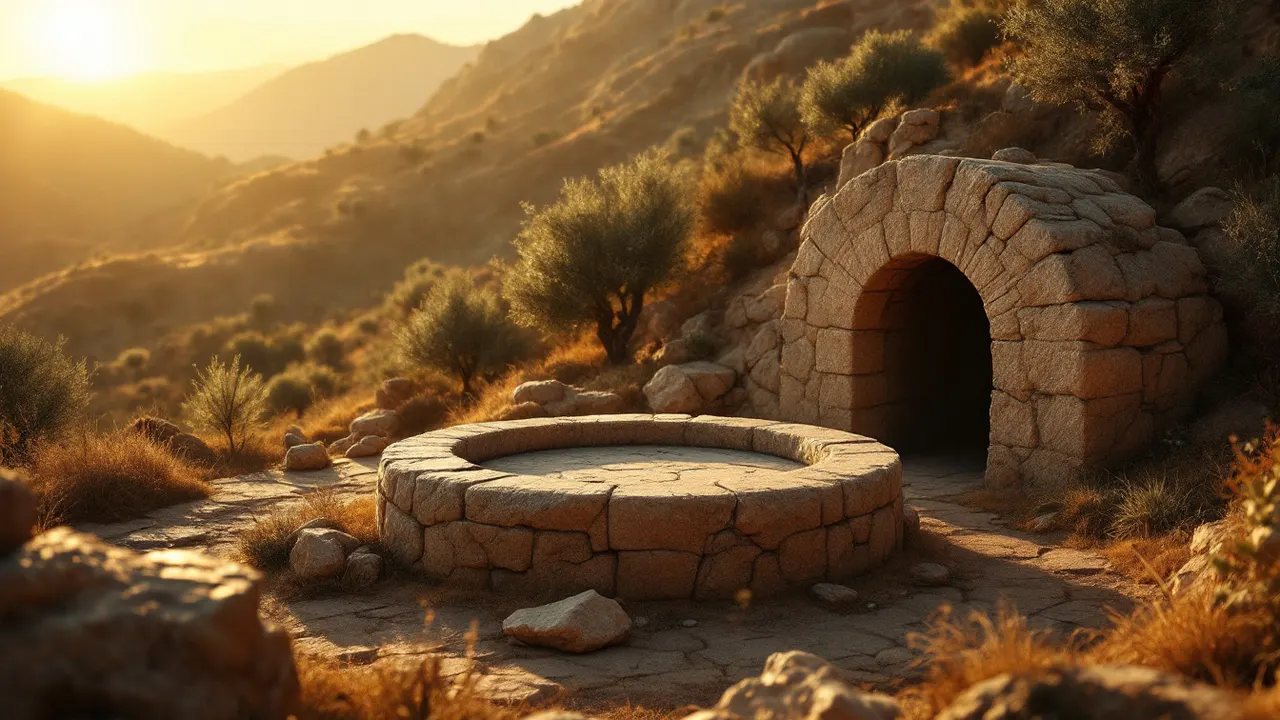
The Bible never commands cremation and never forbids it. Burial was the normal practice for God's people throughout Scripture, and many Christians still prefer it as a picture of the resurrection, but no verse says that cremation is a sin or that it can stop God from raising the dead. Most major Christian traditions today allow cremation, as long as it is done with respect and not as a denial of the resurrection.
If you are making plans for yourself or grieving someone you love, this page walks through what Scripture actually shows, what churches teach and where real comfort is found.
Burial in the Bible
From the first pages of Genesis, God's people buried their dead. After the fall, God told Adam that the human body would return to the earth it came from:
In the sweat of thy face shalt thou eat bread, till thou return unto the ground; for out of it wast thou taken: for dust thou art, and unto dust shalt thou return.
— Genesis 3:19 (KJV)
The first land Abraham ever owned in the Promised Land was a burial cave. He bought it so he could lay his wife to rest with honor:
And after this, Abraham buried Sarah his wife in the cave of the field of Machpelah before Mamre: the same is Hebron in the land of Canaan.
— Genesis 23:19 (KJV)
Abraham, Isaac, Rebekah, Leah and Jacob were later buried in the same cave (Genesis 49:29–31). Joseph made Israel promise to carry his bones out of Egypt, and Moses kept that promise centuries later (Genesis 50:25, Exodus 13:19). Even Moses was buried, by God Himself, in a valley in Moab (Deuteronomy 34:6).
In the New Testament the pattern continues. John the Baptist's disciples buried his body (Matthew 14:12). Lazarus was laid in a tomb (John 11:38). Most importantly, Jesus was wrapped in linen with spices and placed in a new tomb cut from rock (John 19:40–42).
Why burial mattered to Israel
Burial expressed several beliefs at once. It honored the body as something God made. It kept families together, as when Abraham was "gathered to his people" (Genesis 25:8). And over time it became a picture of hope, since a grave is a place where someone sleeps and waits. The Bible often describes believers who have died as "asleep," a word that assumes a waking to come.
Fire and Burning in Scripture
When burning a body appears in the Old Testament, it is usually connected to judgment or disgrace. Achan and his household were burned after their sin at Jericho (Joshua 7:25). The prophet Amos condemned the king of Moab because he "burned the bones of the king of Edom into lime" (Amos 2:1), treating a dead enemy with contempt.
Because of verses like these, some Christians feel that cremation carries a shadow of judgment. Others note that these passages describe punishment and desecration, not a family's loving choice for a funeral. The Bible never gives a law about how bodies must be handled after death, only examples.
The case of King Saul
The most discussed example is the death of Saul, Israel's first king. After Saul and his sons died in battle on Mount Gilboa, the Philistines cut off his head and hung his body on the wall of Beth-shan. The men of Jabesh-gilead, whom Saul had once rescued, would not let that stand:
All the valiant men arose, and went all night, and took the body of Saul and the bodies of his sons from the wall of Bethshan, and came to Jabesh, and burnt them there. And they took their bones, and buried them under a tree at Jabesh, and fasted seven days.
— 1 Samuel 31:12–13 (KJV)
These men burned the bodies, but the Bible presents what they did as loyal and honorable. David later blessed them for it (2 Samuel 2:5). Scholars think the burning may have been needed because the bodies had been mutilated and exposed. Even so, they still buried the bones, and David eventually moved them to the family tomb of Saul's father, Kish (2 Samuel 21:12–14).
This story does not prove that cremation is ideal, but it does show that burning a body is not automatically shameful in Scripture. What mattered was the love and respect behind the act.
Can God Raise a Body That Was Cremated?
This is the question behind most worries about cremation. The answer of the whole Christian church has always been yes.
Think about what happens to every body over time. Bodies buried in the ground become dust, just as Genesis 3:19 says. Christians have died in fires, at sea and in ways that left nothing to bury. Many faithful martyrs in the early church were burned by their persecutors. No believer has ever thought that God would fail to raise them.
Paul describes the resurrection body as something far greater than the one laid in the ground:
So also is the resurrection of the dead. It is sown in corruption; it is raised in incorruption: It is sown in dishonour; it is raised in glory: it is sown in weakness; it is raised in power: It is sown a natural body; it is raised a spiritual body. There is a natural body, and there is a spiritual body.
— 1 Corinthians 15:42–44 (KJV)
The God who formed Adam from the dust and called Enoch into His presence is not limited by what remains of a body. Revelation even pictures the sea giving up its dead on the last day (Revelation 20:13). The resurrection depends on God's power, not on the condition of the grave.
What Major Christian Traditions Teach
Christians are not all in the same place on this question, and it helps to know the main views.
- Roman Catholic Church: For centuries the Catholic Church discouraged cremation, partly because some people used it to deny the resurrection. Since 1963 it has been permitted. Catholic guidance asks that the ashes be kept in a sacred place, such as a cemetery or church columbarium, rather than scattered or kept at home, and that burial is still preferred.
- Eastern Orthodox Church: Orthodox churches generally do not allow cremation for their members and keep to traditional burial, seeing it as the way the church has always honored the body.
- Protestant churches: Most mainline and evangelical churches treat cremation as a matter of personal choice and conscience. Some pastors gently encourage burial as a stronger picture of the resurrection, while others focus on cost, family needs and practical concerns.
- Jewish and Muslim practice: Traditional Judaism and Islam both require burial and generally forbid cremation, which is one reason the practice still feels foreign to many people raised with a strong biblical heritage.
If you belong to a church, it is wise to talk with your pastor or priest, who can explain what your own tradition asks and help you plan.
Reasons Christians give for each choice
Families who choose burial often say it follows the example of Jesus, keeps a place to visit and pray, and pictures the body being "sown" in hope. Families who choose cremation often mention lower cost, the wishes of the person who died, distance from family land, or the simplicity it brings. Scripture lets believers weigh these things with love and wisdom.
Comfort for Grieving Families
If you are reading this after losing someone who was cremated, please hear this clearly: your loved one is not lost to God because of how their body was cared for. The Bible says that for a believer, to be away from the body is to be with the Lord:
We are confident, I say, and willing rather to be absent from the body, and to be present with the Lord.
— 2 Corinthians 5:8 (KJV)
Paul wrote to grieving Christians in Thessalonica so they would not mourn without hope:
But I would not have you to be ignorant, brethren, concerning them which are asleep, that ye sorrow not, even as others which have no hope. For if we believe that Jesus died and rose again, even so them also which sleep in Jesus will God bring with him.
— 1 Thessalonians 4:13–14 (KJV)
Grief is real, and the Bible never asks you to hide it. Jesus Himself wept at the tomb of His friend Lazarus (John 11:35), even though He was about to raise him. Then He spoke the words that Christians have read at funerals for two thousand years:
Jesus said unto her, I am the resurrection, and the life: he that believeth in me, though he were dead, yet shall he live:
— John 11:25 (KJV)
Many families find comfort in reading Psalm 23 together, with its promise that God walks with us "through the valley of the shadow of death." Similar questions about honoring the body also come up when people ask what the Bible says about tattoos.
The story of Enoch, the man who "walked with God" and was taken without seeing death, is a beautiful reminder that life with God does not end at the grave, and you can watch it in Enoch – The Movie.

Frequently Asked Questions
Is it a sin to be cremated?
No verse in the Bible says cremation is a sin. Burial was the common practice in Scripture and many Christians prefer it, but the choice is generally treated as a matter of conscience. What matters most is that the body is treated with respect and that the choice is not meant as a denial of the resurrection.
Can a cremated person go to heaven?
Yes. Salvation depends on faith in Jesus Christ, not on what happens to the body after death. Believers who are cremated are "present with the Lord" (2 Corinthians 5:8) and will share in the resurrection just like those who are buried.
Will cremated bodies be resurrected?
Christians believe God will raise all the dead, whether their bodies were buried, lost at sea or burned. Every buried body eventually returns to dust anyway (Genesis 3:19). The resurrection rests on the power of God, who created life from dust in the first place.
Was anyone cremated in the Bible?
The clearest example is King Saul and his sons, whose bodies were burned by the men of Jabesh-gilead before their bones were buried (1 Samuel 31:12–13). The Bible describes this as a loyal and honorable act. Other burnings in Scripture, such as Achan in Joshua 7, were connected with judgment.
What does the Catholic Church say about cremation?
The Catholic Church has permitted cremation since 1963, while still preferring burial. It asks that the ashes be placed in a sacred place such as a cemetery or columbarium, and not scattered, divided or kept at home. Families can ask their parish for specific guidance.
Is it wrong to scatter ashes or keep them at home?
The Bible does not address this directly, so Christians differ. Catholic teaching asks families not to scatter or keep ashes at home, while many Protestant churches leave it to the family's judgment. Whatever you decide, a respectful and prayerful choice honors both your loved one and God.
Watch the Bible come alive
New full-length Bible movies every week on our YouTube channel.
▶ Subscribe to Epic Bible Movies