Epic Bible

Methuselah was a man who lived before the flood and is the oldest person in the Bible, living 969 years according to Genesis 5:27. He was the son of Enoch, the man who "walked with God," and the grandfather of Noah. If you add up the ages given in Genesis, Methuselah died in the very year the flood began.
Only a few verses mention him, but his name has become a byword for old age. Here is what Scripture says about Methuselah, his remarkable family, the meaning of his name and why people before the flood lived so long.
Methuselah in Genesis 5
Methuselah appears in Genesis 5, the family record that traces the line from Adam to Noah. His father was Enoch, who became a father at a relatively young age for that time:
And Enoch lived sixty and five years, and begat Methuselah: And Enoch walked with God after he begat Methuselah three hundred years, and begat sons and daughters:
— Genesis 5:21–22 (KJV)
Then Genesis gives Methuselah's own entry, which follows the same pattern as the others in the chapter:
And Methuselah lived an hundred eighty and seven years, and begat Lamech. And Methuselah lived after he begat Lamech seven hundred eighty and two years, and begat sons and daughters: And all the days of Methuselah were nine hundred sixty and nine years: and he died.
— Genesis 5:25–27 (KJV)
That is all Genesis tells us about his life. We do not know his wife's name, his work or any words he spoke. His name also appears in the genealogies of 1 Chronicles 1:3 and Luke 3:37, where the KJV spells it "Mathusala," as part of the family line that leads to Jesus.
Methuselah's Family
Methuselah stood at the center of one of the most remarkable families in the Bible.
- His father, Enoch, walked with God for three hundred years and then "was not; for God took him" (Genesis 5:24). He did not die. You can read his story in who was Enoch in the Bible.
- His son, Lamech, was born when Methuselah was 187. Lamech lived 777 years (Genesis 5:31).
- His grandson, Noah, was born when Lamech was 182. Lamech named him with a hope for relief from hard labor on the cursed ground:
And he called his name Noah, saying, This same shall comfort us concerning our work and toil of our hands, because of the ground which the LORD hath cursed.
— Genesis 5:29 (KJV)
Genesis says Enoch's long walk with God began after Methuselah was born, so Methuselah grew up in that home and was 300 years old when his father was taken. He was still alive while his grandson Noah prepared for the flood.
Methuselah and Adam
The numbers in Genesis 5 show something striking. By that chronology, Methuselah was born 687 years after the creation of Adam, and Adam lived to be 930 (Genesis 5:5). That means Methuselah's life overlapped with Adam's for about 243 years. The Bible does not say they met, but in principle Methuselah could have heard about Eden from the first man himself, and then passed those memories down to Noah.
Did Methuselah Die in the Flood?
The Bible does not say how Methuselah died. It simply ends his entry with "and he died." But the numbers in Genesis allow us to calculate when he died.
Here is the calculation, using the ages in Genesis 5 and 7:
- Methuselah was 187 when Lamech was born (Genesis 5:25).
- Lamech was 182 when Noah was born (Genesis 5:28). So Methuselah was 369 when Noah was born.
- Noah was 600 when the flood came:
And Noah was six hundred years old when the flood of waters was upon the earth.
— Genesis 7:6 (KJV)
- 369 plus 600 equals 969, the exact age of Methuselah at his death.
So by Genesis chronology, Methuselah died in the year of the flood. Counting from the creation of Adam, that year is often given as 1656. His son Lamech, by the same numbers, died five years earlier.
What this calculation does not tell us is whether Methuselah died in the waters or shortly before they came. Many Christians assume he died before the rain began, since he was not one of the eight people on the ark and Scripture never lists him among the wicked. An old Jewish tradition in the Talmud even suggests that the seven days of waiting before the flood (Genesis 7:10) were days of mourning for Methuselah. That is a tradition, not a teaching of the Bible, but it reflects a common feeling that this righteous family line was honored to the very end.
A note on the Greek Old Testament
The ancient Greek translation of the Old Testament, the Septuagint, gives different ages for some of the men in Genesis 5. In some of its manuscripts, the numbers would place Methuselah's death after the flood had begun, even though he was not on the ark. Augustine and other early writers discussed this puzzle. The Hebrew text, which the KJV follows, has no such difficulty: Methuselah's death falls in the flood year itself.
What Does the Name Methuselah Mean?
Scholars are not certain what Methuselah's name means, and several explanations have been offered:
- "Man of the spear" or "man of the javelin." This is a common scholarly reading, taking the first part as "man" and the second as a word for a weapon or dart.
- "Man of the sending forth." The second part of the name can be connected to a Hebrew verb meaning "to send."
- "His death shall bring it" or "When he dies, it shall be sent." This popular reading, found in many sermons and devotionals, sees the name as a prophecy of the flood that came in the year of his death.
The last reading is appealing, because the chronology really does place his death in the flood year. However, many Hebrew scholars consider it a stretch linguistically. It is best held loosely as a possible meaning rather than a certain one.
God's Patience Before the Flood
Whatever his name means, Methuselah's long life is often seen as a picture of God's patience. The world around him was growing more and more corrupt:
And God saw that the wickedness of man was great in the earth, and that every imagination of the thoughts of his heart was only evil continually.
— Genesis 6:5 (KJV)
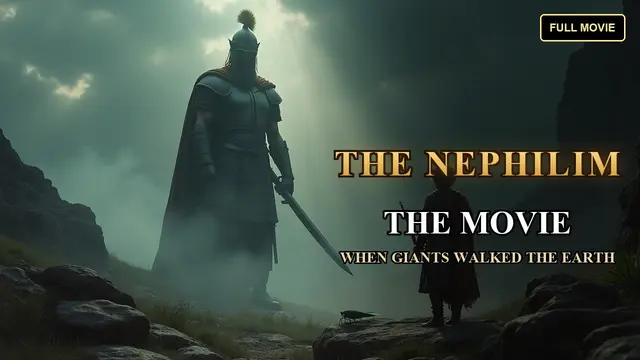
You can read about that dark era in who were the Nephilim. Yet God did not bring judgment quickly. The longest life in human history stretched across those centuries, and God's judgment came only in the year it ended. The New Testament describes this same patient heart of God:
The Lord is not slack concerning his promise, as some men count slackness; but is longsuffering to us-ward, not willing that any should perish, but that all should come to repentance.
— 2 Peter 3:9 (KJV)
Peter also says that God waited "in the days of Noah, while the ark was a preparing" (1 Peter 3:20). Methuselah's 969 years remind us that God gives people time to turn to Him.
Why Did People Live So Long Before the Flood?
The ages in Genesis 5 are far longer than anything we know today. Adam lived 930 years, Jared 962 and Noah 950. Christians and scholars explain these numbers in several ways.
- Literal lifespans. Many Christians take the ages at face value. They suggest that people closer to creation had stronger bodies, fewer inherited diseases, or lived in a very different environment before the flood. In this view, sin and its effects slowly wore down the human body over many generations.
- A turning point after the flood. Lifespans drop sharply after the flood. Shem lived 600 years, Abraham 175 (Genesis 25:7), Joseph 110 (Genesis 50:26) and Moses 120 (Deuteronomy 34:7). By the time of the psalms, a normal life was "threescore years and ten" (Psalm 90:10).
- Genesis 6:3. God said of mankind, "yet his days shall be an hundred and twenty years." Some read this as a new limit on the human lifespan. Others read it as a countdown of 120 years before the flood.
- Symbolic or honorific numbers. Some scholars think the ages may carry symbolic meaning or follow an ancient way of honoring important ancestors. They point out that the Sumerian King List, from ancient Mesopotamia, gives kings before its flood reigns of many thousands of years. By comparison, the ages in Genesis are much more modest.
Christians disagree on which view is best, but most agree on the message: life before the flood was long, and it was still not forever. Again and again in Genesis 5, the record ends with the words "and he died." Methuselah, the oldest of them all, was no exception. As Moses prayed, "So teach us to number our days, that we may apply our hearts unto wisdom" (Psalm 90:12).
Lessons From Methuselah
- A long life is a gift, but not the goal. Methuselah lived longer than anyone, yet the Bible remembers his father Enoch for how he walked, not how long.
- Faith is passed down. From Enoch to Methuselah to Lamech to Noah, a godly family line held on in a violent world.
- God is patient. The years before the flood show a God who waits and warns before He judges.
- Every life has an end. Even 969 years came to a close, which invites each of us to live wisely today.
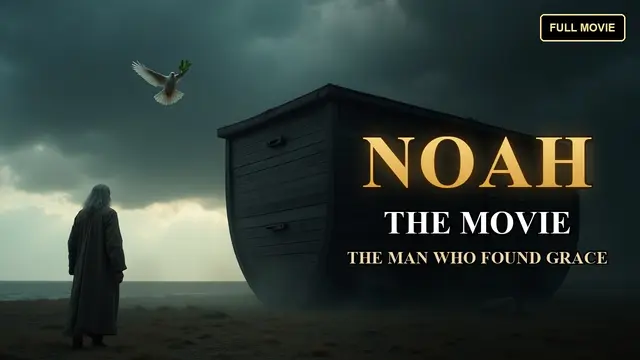
The story of Methuselah's grandson and the flood that came in his final year is told in the story of Noah's Ark, and an Epic Bible Movies film about Noah is coming soon on the YouTube channel. To see Methuselah's birth and the life of the father who shaped him, watch Enoch – The Movie.

Frequently Asked Questions
How old was Methuselah when he died?
Methuselah was 969 years old when he died, according to Genesis 5:27. That makes him the oldest person whose age is recorded in the Bible. His grandfather Jared, at 962 years, was the second oldest.
Who was Methuselah's father?
Methuselah's father was Enoch, the man who "walked with God" and was taken by God without dying (Genesis 5:24). Enoch was 65 when Methuselah was born. Methuselah's son was Lamech, and his grandson was Noah.
Did Methuselah die in the flood?
The Bible does not say how he died. By adding the ages in Genesis 5 and 7, Methuselah died in the same year the flood began, but Scripture does not say whether it was before or during the flood. Many Christians believe he died shortly before the waters came.
Was Methuselah on Noah's ark?
No. Genesis says only eight people entered the ark: Noah, his wife, his three sons and their wives (Genesis 7:13; 1 Peter 3:20). By Genesis chronology, Methuselah's life ended in the flood year, so he was not among those saved on the ark.
What does the name Methuselah mean?
The meaning is uncertain. Common suggestions include "man of the spear," "man of the sending forth" and the popular reading "when he dies, it shall be sent." Because the last meaning is debated by Hebrew scholars, it is wise not to build too much on it.
Is Methuselah in the New Testament?
Yes, briefly. Luke's genealogy of Jesus includes him, spelled "Mathusala" in the KJV (Luke 3:37). He is part of the line that runs from Adam through Noah to Abraham, David and finally Jesus.
Watch the Bible come alive
New full-length Bible movies every week on our YouTube channel.
▶ Subscribe to Epic Bible Movies