Epic Bible
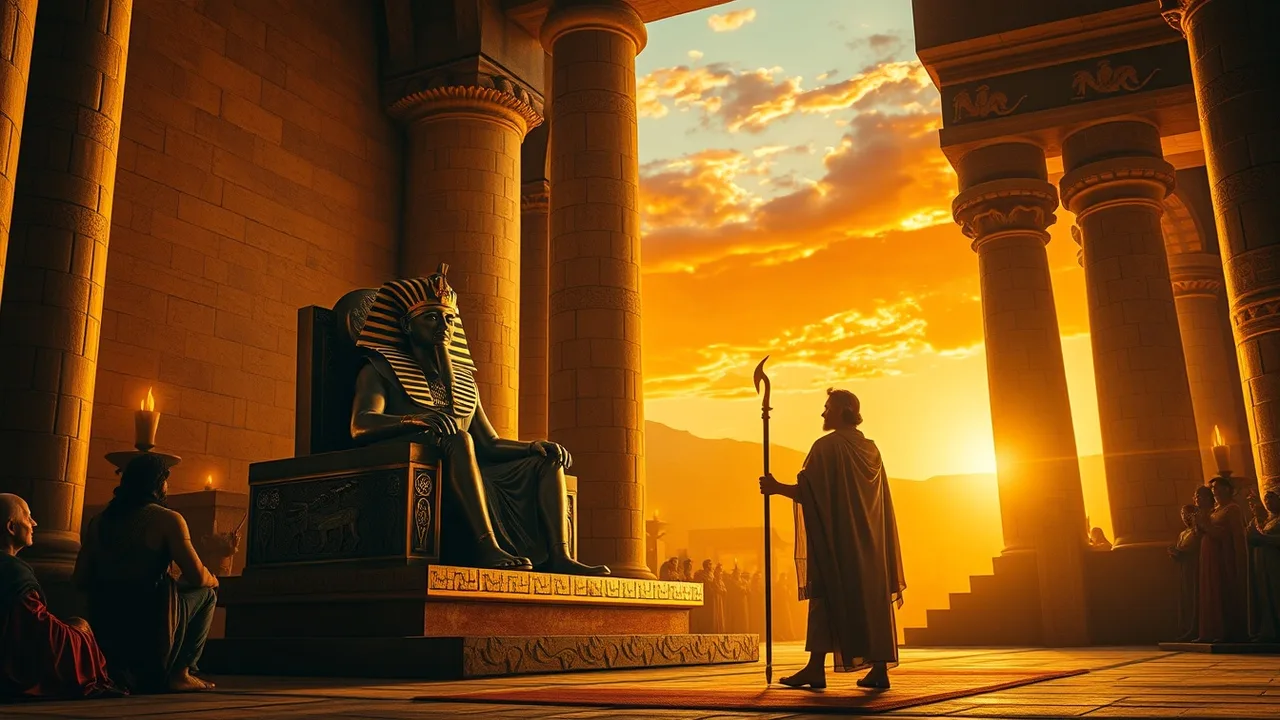
God hardened Pharaoh's heart as a judgment on a king who had already set himself against God and was cruelly oppressing Israel. In the Exodus account, Pharaoh refuses God first and hardens his own heart several times, and God then confirms and strengthens the choice Pharaoh had made. God used that stubbornness to show His power, free His people and make His name known, as Paul explains in Romans 9:17–18.
Let's walk through what Exodus actually says, how the New Testament reads it, and what it teaches us today.
The Pharaoh Who Said No
The story begins with Israel enslaved in Egypt. An earlier king had forced the Hebrews into hard labor and ordered every newborn Hebrew boy to be thrown into the Nile (Exodus 1:22). That king later died (Exodus 2:23), but the slavery continued under the Pharaoh whom Moses would face.
When Moses and Aaron first brought God's message, "Let my people go," Pharaoh answered with open contempt:
And Pharaoh said, Who is the LORD, that I should obey his voice to let Israel go? I know not the LORD, neither will I let Israel go.
— Exodus 5:2 (KJV)
He then made the slaves gather their own straw for the same number of bricks (Exodus 5:6–9). So before any mention of God hardening Pharaoh's heart in the plague narrative, Pharaoh had already rejected God and chosen cruelty.
God Said It Would Happen
Even before Moses returned to Egypt, God told him what to expect. He knew the king's heart: "I am sure that the king of Egypt will not let you go, no, not by a mighty hand" (Exodus 3:19). Then He announced what He would do:
And the LORD said unto Moses, When thou goest to return into Egypt, see that thou do all those wonders before Pharaoh, which I have put in thine hand: but I will harden his heart, that he shall not let the people go.
— Exodus 4:21 (KJV)
God repeated the promise in Exodus 7:3, adding that He would "multiply my signs and my wonders in the land of Egypt." From the beginning, the hardening was tied to a purpose: a series of great signs that would reveal who the LORD is.
Tracing the Hardening Through the Plagues
The word "harden" and similar phrases appear about twenty times in Exodus 4–14. Reading them in order shows a clear pattern.
The first five plagues
During the early plagues, the text says either that Pharaoh's heart "was hardened" or that Pharaoh hardened it himself:
- Blood (1st plague): "Pharaoh's heart was hardened" (Exodus 7:22).
- Frogs (2nd): Pharaoh begged for relief, then changed his mind once it came.
- Lice (3rd): Even his own magicians admitted, "This is the finger of God," yet "Pharaoh's heart was hardened" (Exodus 8:19).
- Flies (4th): Pharaoh promised to let the people go, then went back on his word (Exodus 8:28–32).
- Livestock (5th): "The heart of Pharaoh was hardened" (Exodus 9:7).
The frogs are a vivid example. As soon as the pressure lifted, Pharaoh's pride returned:
But when Pharaoh saw that there was respite, he hardened his heart, and hearkened not unto them; as the LORD had said.
— Exodus 8:15 (KJV)
(The KJV of Exodus 7:13 reads "he hardened Pharaoh's heart," but the Hebrew there is usually translated "Pharaoh's heart was hardened," as most modern versions have it.)
The sixth plague: God confirms the choice
With the plague of boils, the narrator says for the first time that the LORD Himself hardened Pharaoh's heart:
And the LORD hardened the heart of Pharaoh, and he hearkened not unto them; as the LORD had spoken unto Moses.
— Exodus 9:12 (KJV)
Yet even after this, Pharaoh is still described as acting on his own. After the hail, he confessed, "I have sinned this time" (Exodus 9:27). But when the storm stopped, the old pattern returned:
And when Pharaoh saw that the rain and the hail and the thunders were ceased, he sinned yet more, and hardened his heart, he and his servants.
— Exodus 9:34 (KJV)
Notice the words "he sinned yet more." Scripture holds Pharaoh responsible for his choices, even while saying God was at work in them.
The final plagues and the Red Sea
From the locusts onward, the text repeatedly says the LORD hardened Pharaoh's heart (Exodus 10:1, 10:20, 10:27, 11:10). The last hardening came after Israel had left Egypt, when Pharaoh decided to chase them:
And I will harden Pharaoh's heart, that he shall follow after them; and I will be honoured upon Pharaoh, and upon all his host; that the Egyptians may know that I am the LORD. And they did so.
— Exodus 14:4 (KJV)
Three Hebrew words
Exodus uses three different Hebrew verbs that English Bibles translate as "harden":
- chazaq, meaning to make strong or firm,
- kabed, meaning to make heavy or dull,
- qashah, meaning to make hard or stubborn.
The word kabed is the same root used when God says He will be "honoured" over Pharaoh (Exodus 14:4). Pharaoh made his heart "heavy" against God, and in the end God's own glory, His "weight," was displayed over Pharaoh.
What Paul Says in Romans 9
The apostle Paul uses Pharaoh's story to explain God's sovereign mercy:
For the scripture saith unto Pharaoh, Even for this same purpose have I raised thee up, that I might shew my power in thee, and that my name might be declared throughout all the earth. Therefore hath he mercy on whom he will have mercy, and whom he will he hardeneth.
— Romans 9:17–18 (KJV)
Paul is quoting Exodus 9:16. He then anticipates the objection that comes to everyone's mind: if God hardens whom He wills, how can He still find fault? His answer is humbling: "Nay but, O man, who art thou that repliest against God?" (Romans 9:20). He also notes that God "endured with much longsuffering" those who were ripe for judgment (Romans 9:22).
The Main Christian Views
Believers agree on what the text says, but they explain the relationship between God's action and Pharaoh's choice in different ways. Here are the main views, presented fairly.
- God confirmed Pharaoh's own choice. Many Christians see this as judicial hardening. Pharaoh rejected God again and again, so God gave him over to the path he had chosen, as Paul describes God "giving up" people to their own desires (Romans 1:24). In this view, God did not make a soft heart hard. He let a hard heart become harder.
- God's sovereign purpose. Many in the Reformed tradition emphasize that God actively hardened Pharaoh for His own wise purposes, just as He announced in Exodus 4:21. They stress that God is never the author of evil, and that Pharaoh still acted freely and was guilty for what he did. How both are true is a mystery Scripture does not fully explain.
- God strengthened Pharaoh's resolve. Some interpreters focus on the verb chazaq, "to make strong." The plagues were so terrifying that Pharaoh might have released Israel out of sheer fear, not true change of heart. God "strengthened" him so that he would act on what he really wanted, which shows his true character.
Ancient Jewish teachers wrestled with this too. Some rabbinic commentators noted that during the first five plagues the text does not say God hardened Pharaoh's heart, and they saw the later hardening as a consequence of Pharaoh's earlier stubbornness.
These views overlap more than they conflict. All agree that Pharaoh was responsible, that God was in control, and that God is just.
Why Did God Do It?
Exodus itself gives several reasons:
- So Egypt would know the LORD. "And the Egyptians shall know that I am the LORD" (Exodus 7:5). Pharaoh had asked, "Who is the LORD?" The plagues answered him.
- So Israel would remember. God wanted the story told "in the ears of thy son, and of thy son's son" (Exodus 10:2), and Israel still celebrates it at Passover.
- To judge Egypt's false gods. "Against all the gods of Egypt I will execute judgment" (Exodus 12:12).
- So His name would spread. Forty years later, Rahab in Jericho told the Israelite spies that her people had heard how the LORD dried up the Red Sea (Joshua 2:10).
What Pharaoh's Story Teaches Us
The hardening of Pharaoh's heart is not a story meant to make anyone fear that God is secretly closing the door on them. The Bible is clear that God takes no pleasure in anyone's ruin:
Say unto them, As I live, saith the Lord GOD, I have no pleasure in the death of the wicked; but that the wicked turn from his way and live: turn ye, turn ye from your evil ways; for why will ye die, O house of Israel?
— Ezekiel 33:11 (KJV)
Instead, Pharaoh's story is a warning about what happens when a person keeps saying no to God. Pharaoh received ten chances, made promises in moments of pain and broke them as soon as relief came. Proverbs describes this path: "He, that being often reproved hardeneth his neck, shall suddenly be destroyed" (Proverbs 29:1).
The New Testament uses Israel's own history in the wilderness to give the same loving warning to believers:
While it is said, To day if ye will hear his voice, harden not your hearts, as in the provocation.
— Hebrews 3:15 (KJV)
The hopeful side is that a heart that responds to God today will be softened, not hardened. Compare Pharaoh with another proud king, Nebuchadnezzar of Babylon, who was humbled and finally praised "the King of heaven" (Daniel 4:37). You can read his story in the story of Daniel. The difference was not how far each man had fallen, but whether he turned.
The prophet Jeremiah spent forty years pleading with a nation that would not listen, and you can watch his story of tears and hope in Jeremiah – The Movie.

Frequently Asked Questions
Did Pharaoh harden his own heart first?
Yes. In the plague narrative, Pharaoh's heart "was hardened" or he hardened it himself during the first five plagues (Exodus 7:22; 8:15; 8:32; 9:7). The narrator first says the LORD hardened his heart at the sixth plague (Exodus 9:12). God had foretold the hardening earlier, but Pharaoh's own refusals came first in the story.
Was it fair for God to harden Pharaoh's heart?
The Bible presents it as just, because Pharaoh was a cruel oppressor who rejected God openly and repeatedly. Many Christians see the hardening as God confirming the choice Pharaoh had already made. Paul admits the question is difficult but reminds readers that God is righteous and patient (Romans 9:14–22).
What does Romans 9:17–18 mean?
Paul quotes God's words to Pharaoh to show that God is free to show mercy and to harden as He wills. His point is that salvation rests on God's mercy, not on human effort. Christians differ on how this relates to human choice, but all agree that God is good and just.
How many times was Pharaoh's heart hardened?
Phrases about Pharaoh's heart being hardened appear about twenty times in Exodus 4–14. Some say God would or did harden it, some say Pharaoh hardened it, and some simply say it "was hardened." Counts vary slightly depending on how verses are grouped.
Can God harden a person's heart today?
Scripture warns that persistent rejection of God can lead to a hardened heart (Hebrews 3:15; Romans 1:24). But the same Bible says God is "not willing that any should perish" (2 Peter 3:9). Anyone who is worried about having a hard heart is already showing a tender one, and God welcomes all who turn to Him.
Watch the Bible come alive
New full-length Bible movies every week on our YouTube channel.
▶ Subscribe to Epic Bible Movies